Research built in phases
Nupef’s work with TVWS did not begin with TECER. It grew out of more than a decade of advocacy on spectrum use and took shape in field tests that are still under way. This page gathers, in chronological order, the main milestones of that trajectory.
Timeline
2010
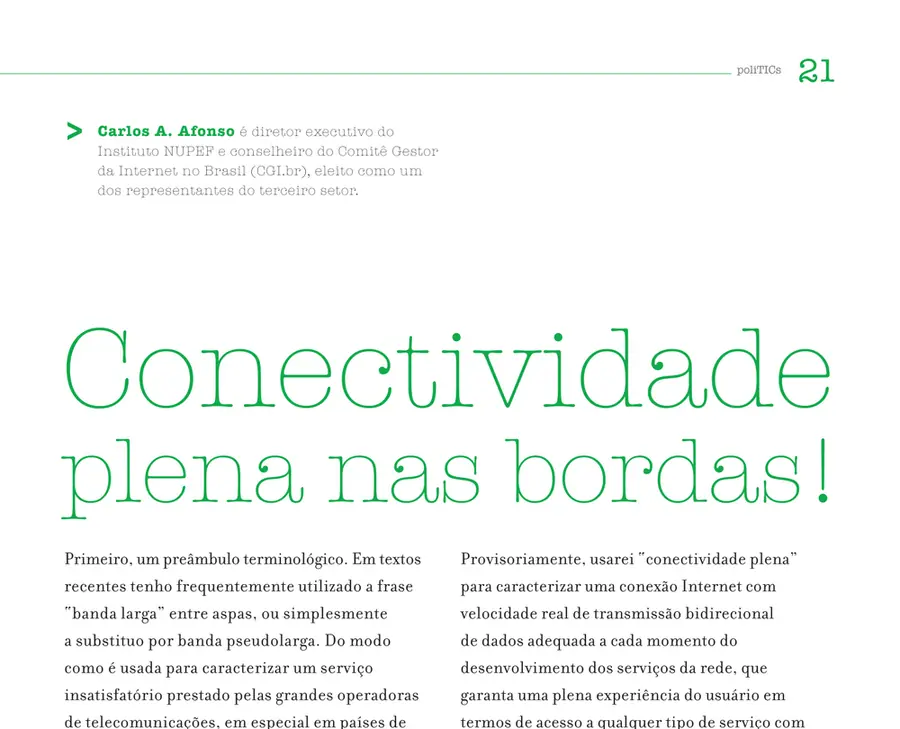
Nupef publishes, under the Association for Progressive Communications (APC), a study on spectrum regulation in Brazil. That same year, Carlos A. Afonso, Nupef’s Executive Director, publishes texts in the poliTICs magazine on “full connectivity,” discussing the concentration of telecommunications infrastructure and the role of spectrum management in universal access.
2013
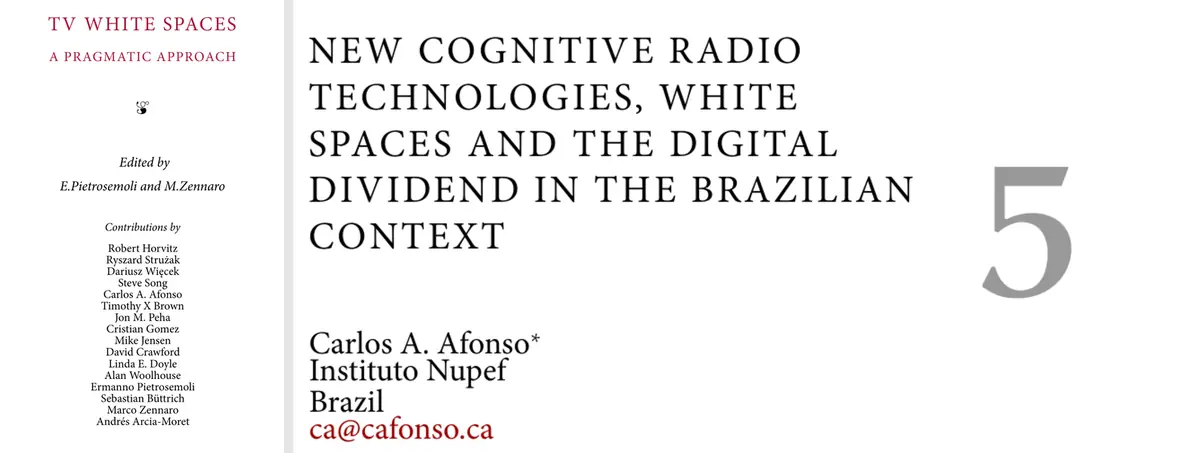
Carlos A. Afonso writes the Brazilian chapter of the book TV White Spaces: A Pragmatic Approach, edited by Ermanno Pietrosemoli and Marco Zennaro. The text, “New Cognitive Radio Technologies, White Spaces and the Digital Dividend in the Brazilian Context,” points to the TV channels freed up by digitization as an opportunity to bring connectivity to scattered communities. It proposes unlicensed or lightly licensed use of the idle spectrum, equal access to fiber transport networks, and public participation in decisions about the spectrum.
2015
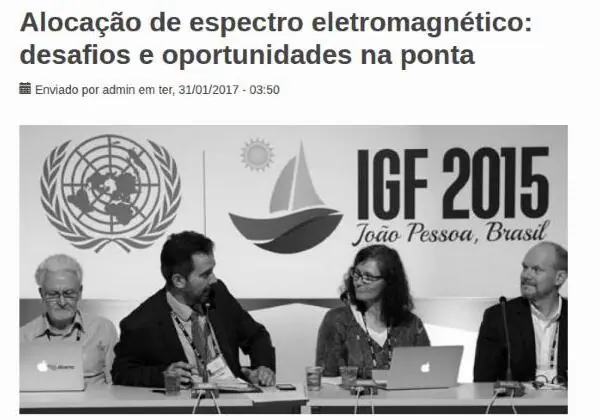
At the Internet Governance Forum (IGF), in João Pessoa, Nupef organizes a panel on spectrum allocation together with CGI.br and APC. The discussion addresses TV “white spaces” as an option for rural areas, makes the case for experimental licenses, and notes that the technology’s feasibility still needed to be tested in practice.
2020
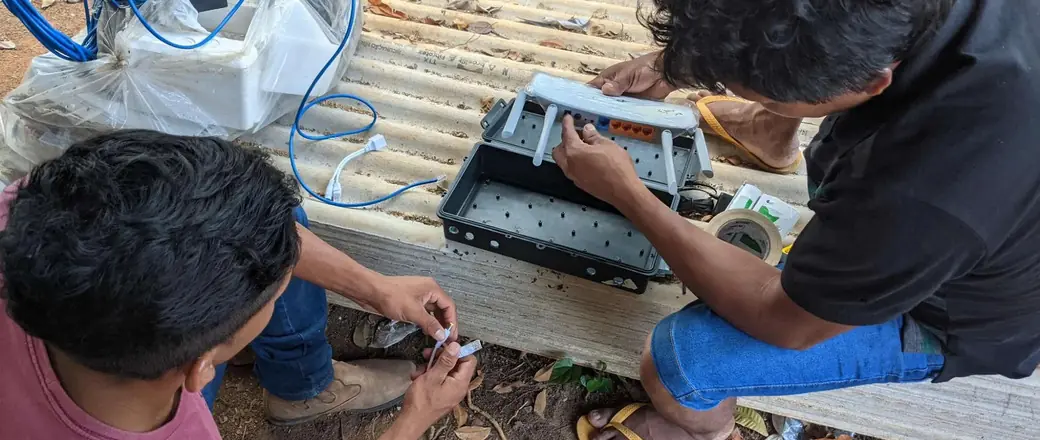
Nupef’s technical team identifies possible uses of TVWS in community networks and begins studying the state of the technology.
2021
With a specific problem in mind, its use in Indigenous territories as internal and internet-access infrastructure, Nupef begins drafting research project proposals for applying the technology.
2022
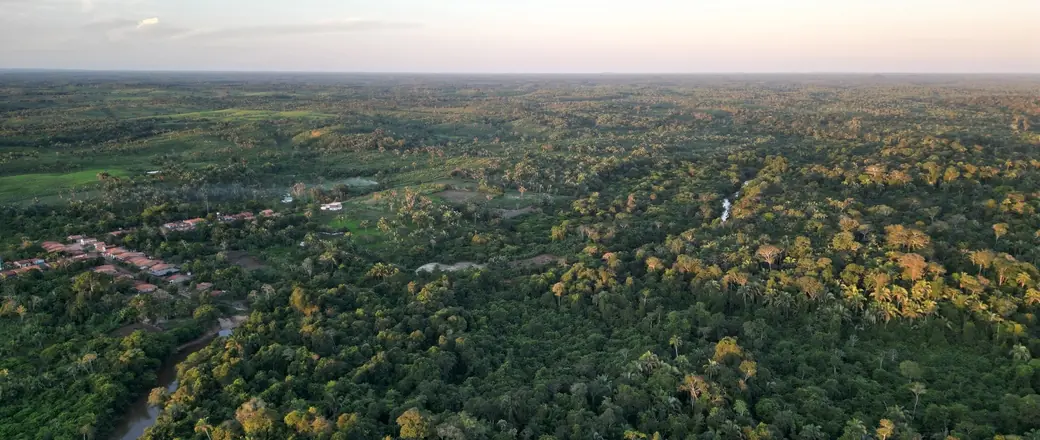
Nupef has a project approved under the BOLT program of the Internet Society Foundation (ISOC Foundation) to test TVWS with the Forest Guardians in the Amazon. This is the program’s first support for Nupef and marks the start of the project’s first phase.
2023
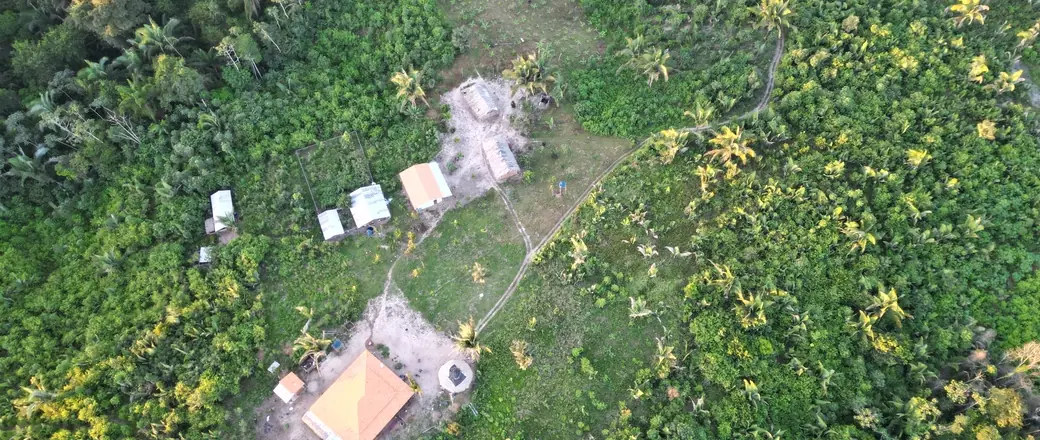
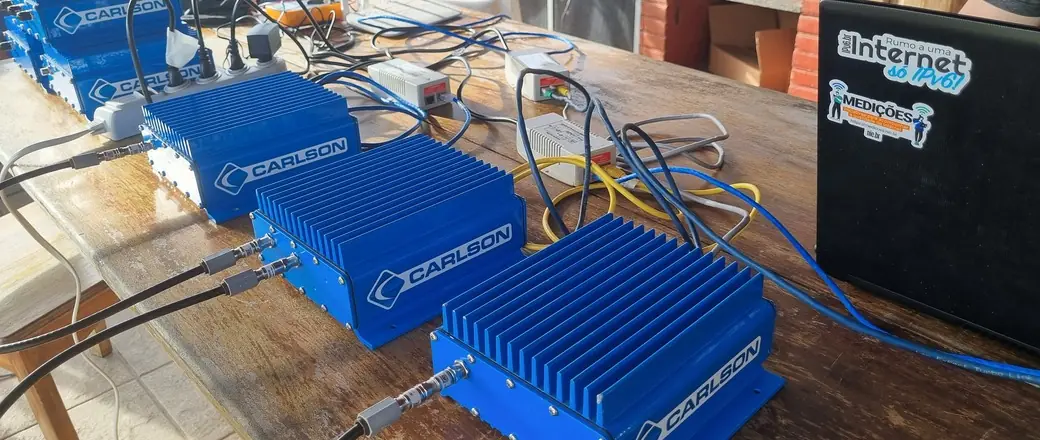
Pre-production phase and acquisition of the test kit: TVWS, off-grid solar power, medium- and long-range communication, drone documentation, remote monitoring, and a backup internet link. The TVWS equipment acquired was Carlson Wireless radios. For analysis and monitoring, SDR systems and a spectrum analyzer were acquired.
2024
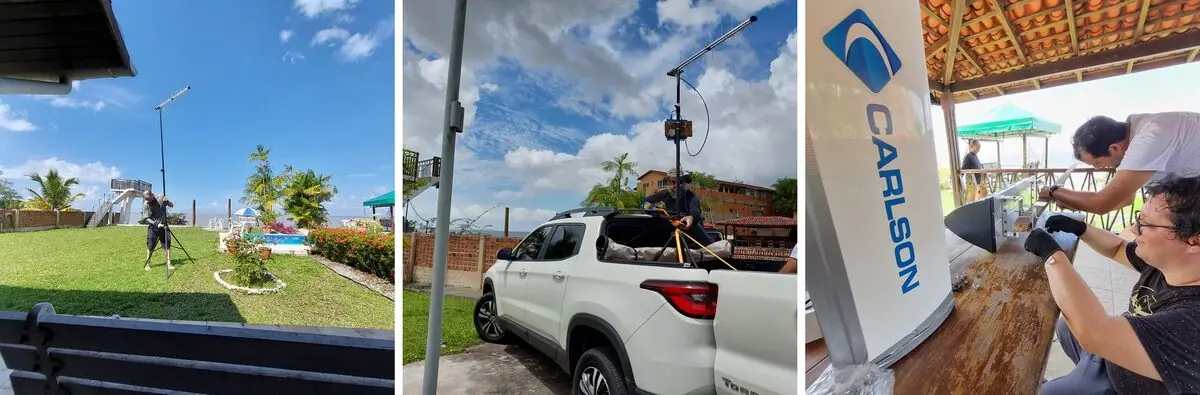
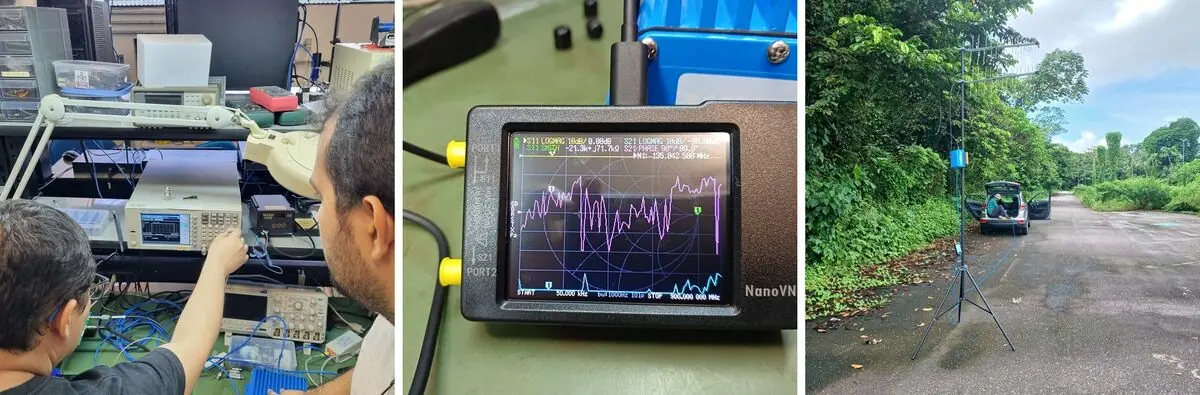
Initial field tests in Mosqueiro (PA), January and February First contact with the TVWS systems integrated with solar power and the network, in an outdoor environment. The base station, the CPEs (the equipment installed at the reception points), the antennas, and the solar system were assembled and validated, with fixed and mobile connectivity tests and link simulations in the Radio Mobile software.
Laboratory tests at UFPA, with LASSE, March and April The TVWS equipment was assessed in a controlled environment to investigate the hypotheses raised in the field. Cables, antennas, and connectors were tested, the radios were opened up for diagnosis, and the original cables were replaced. Measurements were taken at the Guamá Science and Technology Park and on the UFPA campus. This diagnosis prepared the deployment in Maranhão.
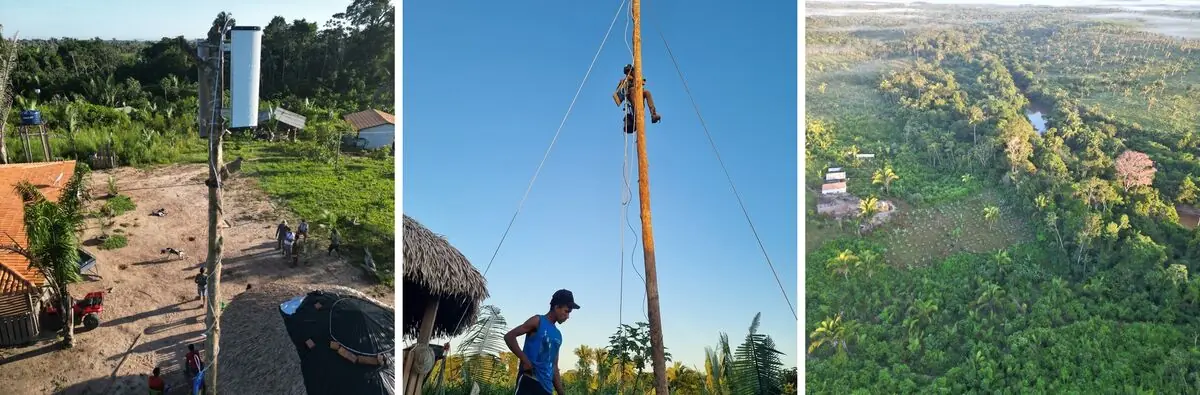
Field deployment in the Terra Indígena Caru (MA), May and June In partnership with the Forest Guardians, the TVWS kit was installed in the Tururi village. The site was defined in dialogue with local leaders, replacing the village originally planned. The goal was to test NLOS links through the forest, connecting villages and the forward posts used by the Guardians. The result pointed to partial technical feasibility of TVWS under NLOS conditions, with range limitations for the most distant points. The initial target of 10 to 15 kilometer links was not reached in this phase.
2025
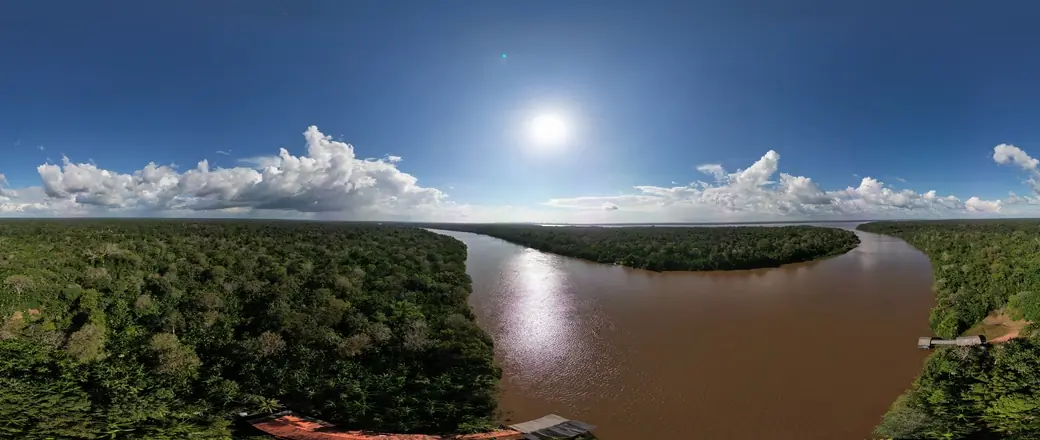
Second phase of the project The ISOC Foundation renewed its support for Nupef to test a new generation of TVWS equipment, assess LoRa technology, and hold a knowledge-exchange forum. The territory shifted to Combu Island, in Belém (PA), with three Quilombola communities, a choice that reduced risks and made access by river and by land easier.
First test bench, November The new phase’s test bench showed that the CPEs connected to the base station, but data traffic was not reaching the internet. The lab work moved to Belém, and the diagnosis continued with the manufacturer.
2026
Technical visit and partnerships, January Nupef’s team traveled to Belém (PA) to assess possible installation sites and consolidate the second phase’s local partnerships.
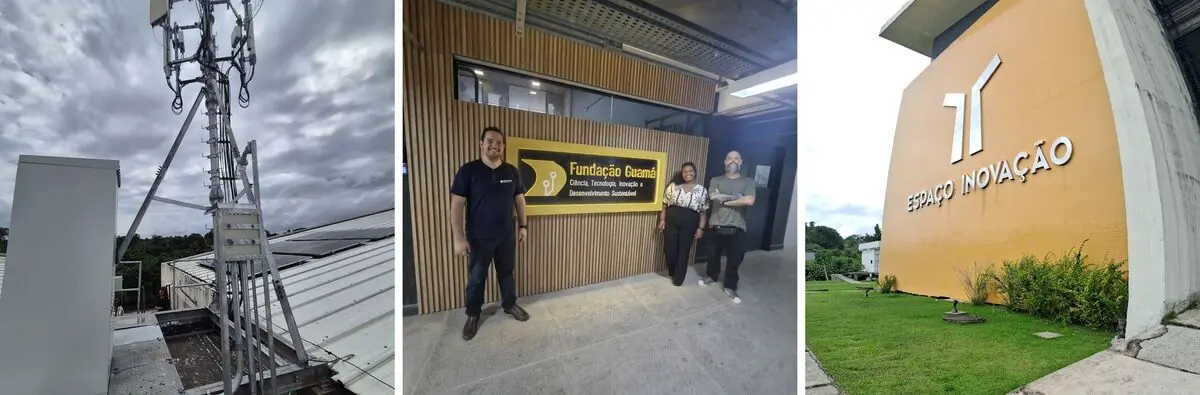
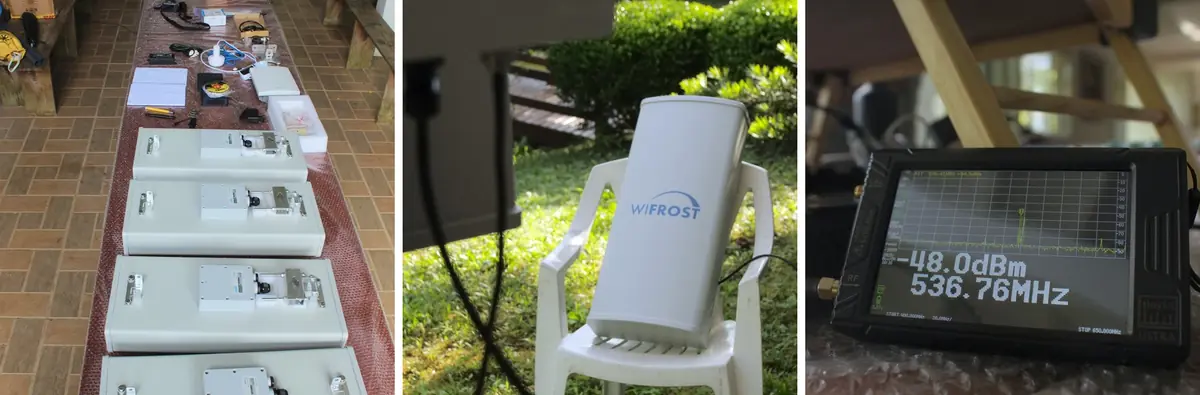
Bench tests and diagnosis at LASSE, May and June Together with the academic partners in Belém, the test lab was reactivated to investigate the data traffic failure identified at the end of 2025. The team mapped the full network topology, ran the four CPEs simultaneously on the test bench, and gave the manufacturer’s technical team remote access. In June, one of the base stations suffered a physical power fault.
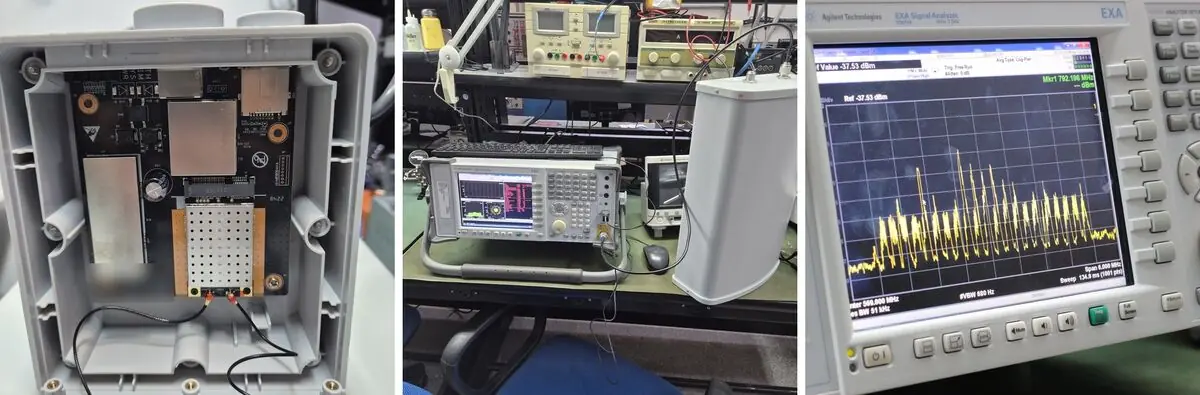
Field installation of the equipment, August In the first week of August, Nupef’s team installed three complementary technologies in Acará (PA): TVWS, for reach through the forest; LoRa with Meshtastic, for low-power communication; Wi-Fi mesh networks, to distribute the connection within the communities. While the TVWS link carries no data yet, Starlink antennas provide internet access, and remote data collection continues.
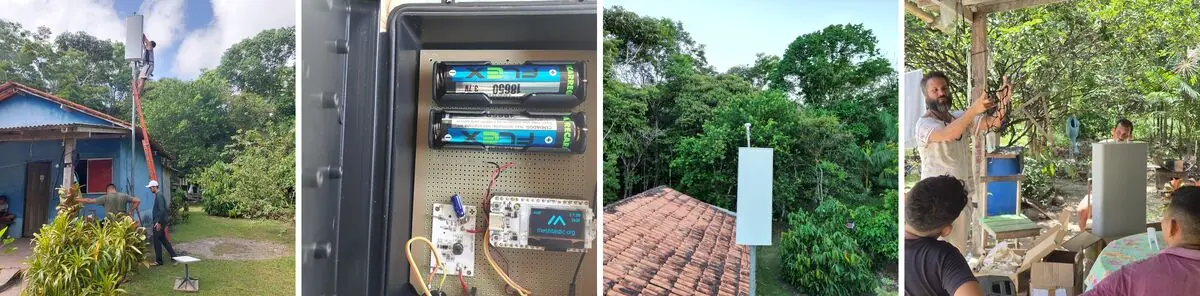
Workshop in Fortaleza, November The workshop “Community connectivity in remote regions with TVWS” brings together Nupef, NIC.br, the Federal University of Ceará, and Anatel to share results and perspectives on TVWS.
The project is expected to conclude in December 2026.