After months of bench work, visits and tests, the network came out of its boxes and into the territory. Between 3 and 7 August 2026, the TECER team and the quilombola community of Guajará Miri installed, together, the three layers planned for Phase 2: a community wifi network to distribute the internet, the TVWS radios to carry the connection far, and solar Meshtastic nodes for local communication, even without internet.
How was the equipment prepared?
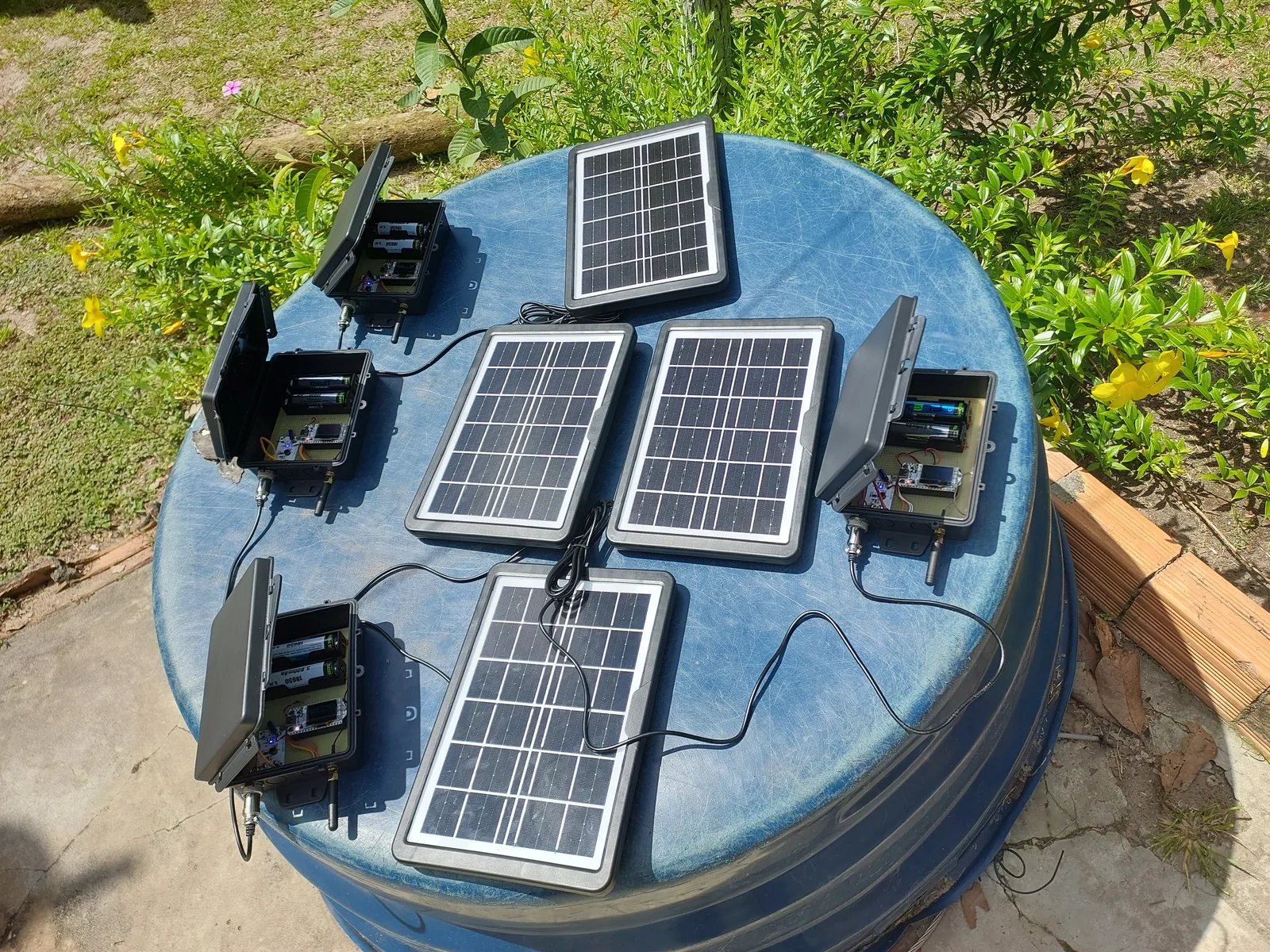
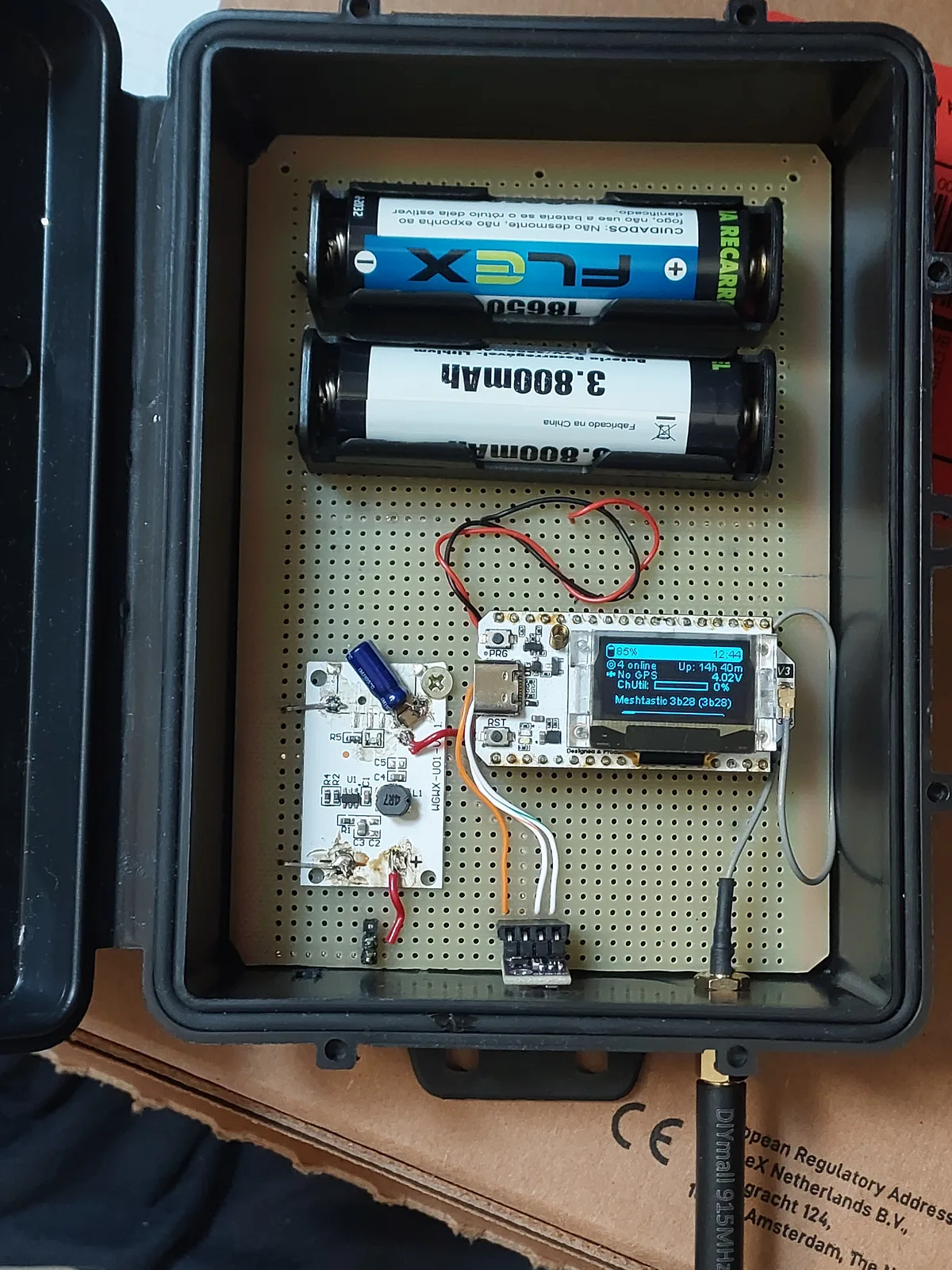
Before the trip, the team built the nodes of the LoRa layer. Each node has a board with a LoRa radio and a small screen, two rechargeable batteries and a charging circuit, all inside a waterproof box that keeps out the rain. Hooked up to a small solar panel, the node runs off-grid, without relying on the power grid.
The low Earth orbit satellite internet kits ( LEO) also arrived, to serve as a temporary internet exit.
What was installed?
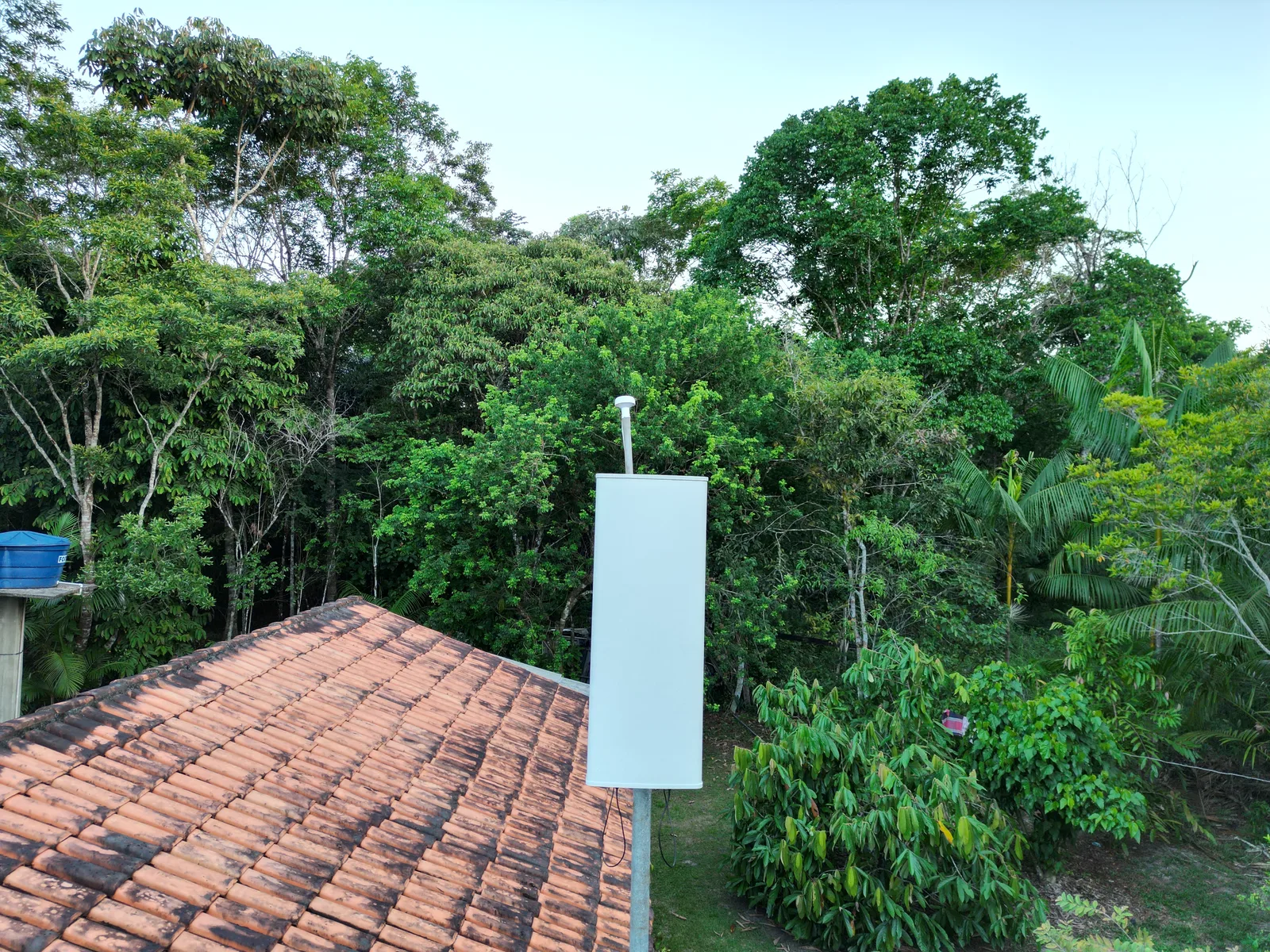
The installation was done at three points, with residents taking part in the assembly and the workshops. At each point, the team left:
- a wifi mesh network, with community routers running LibreMesh, to spread the connection across homes and shared spaces;
- a fixed Meshtastic base node, powered by a solar panel;
- a satellite internet antenna.
The TVWS layer consists of one base station and two CPEs, mounted on masts with sector antennas. Besides the fixed nodes, portable Meshtastic radios were handed out to project participants.
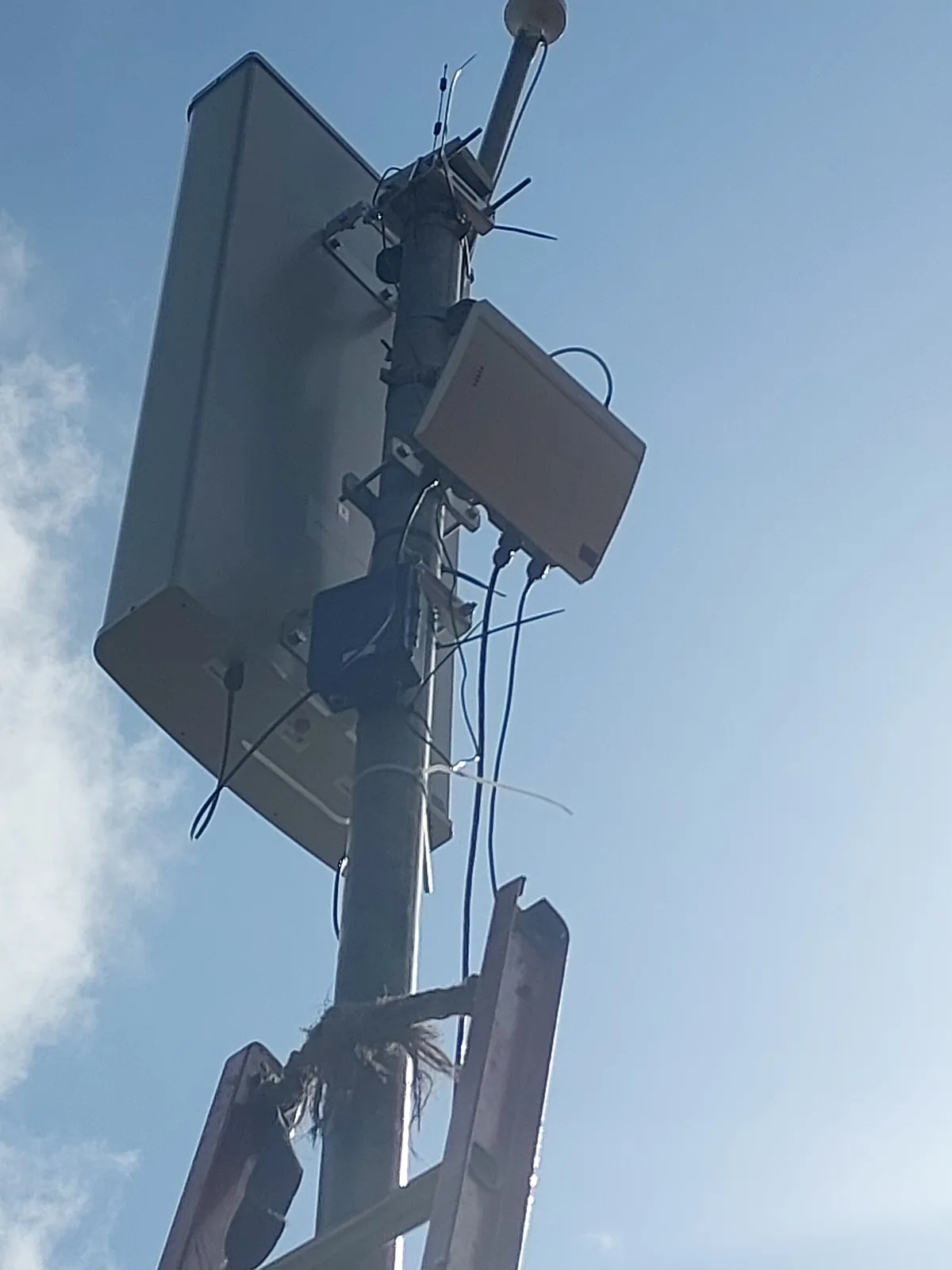
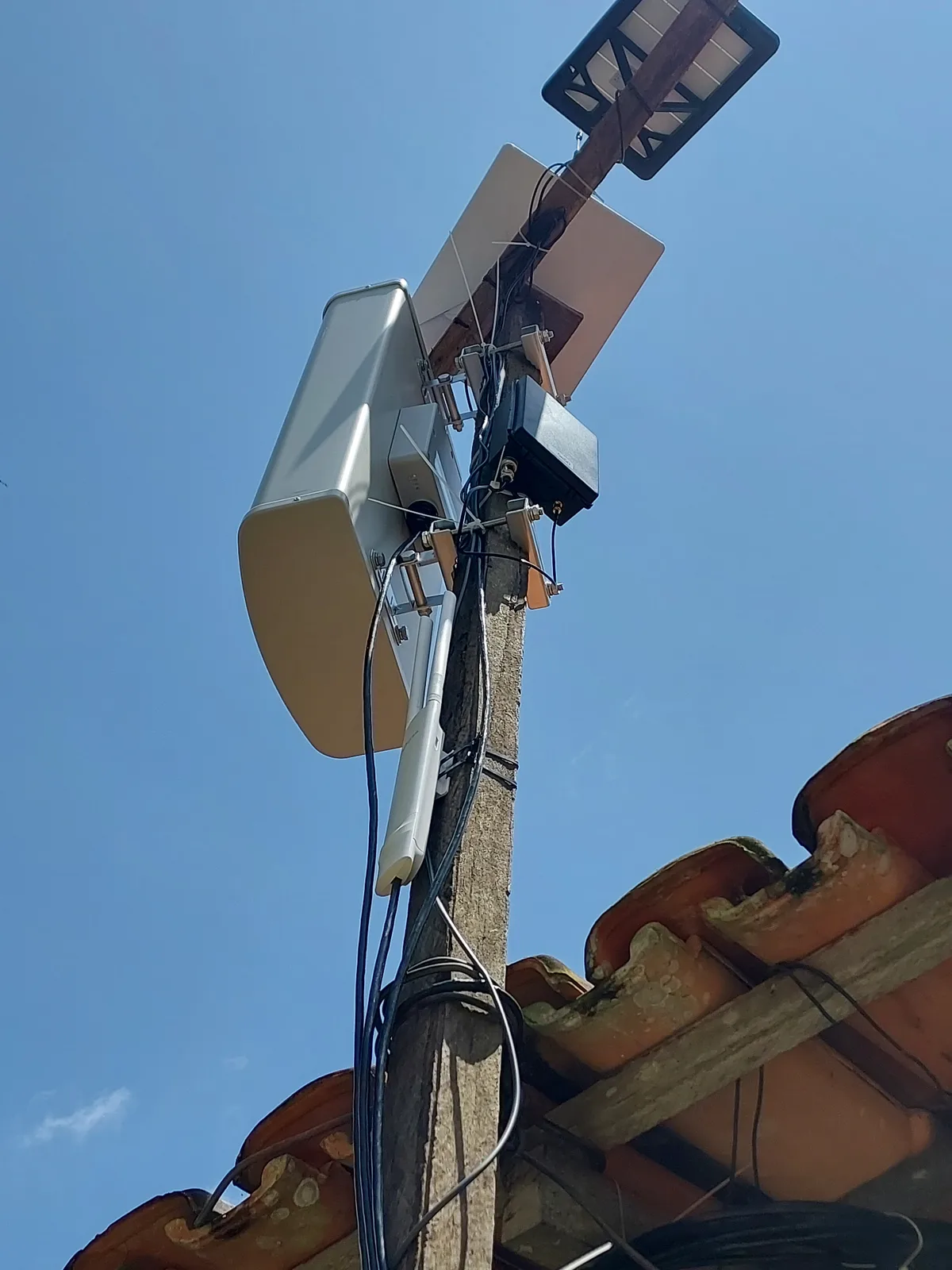
The installation days had their setbacks. Power cuts on site delayed part of the work and showed, in practice, why the solar layer makes sense.
How does the network work today?
The plan was for the internet to reach the communities over the TVWS link, with the satellite connection as a backup. Today it works the other way round: since TVWS does not carry data yet, the internet arrives by satellite, and TVWS is waiting for the problem to be solved with the manufacturer.
The team keeps pursuing support from the manufacturer. As soon as it is certain that the link, which already works, can carry data, Nupef will start applying to Anatel, Brazil’s telecommunications regulator, for licences to use the spectrum.
To look after the network remotely, the team set up a new management server in Nupef’s datacenter and prepared a special version of the routers' system, ready to work with both internet exits, TVWS and satellite. That way, once TVWS starts carrying data, the network can use both paths.
The next steps are to fine-tune the networks remotely and start collecting, also remotely, data from the LoRa nodes and the TVWS radios.
What did we learn at this stage?
- Installing with the community changes the network. People who live there know where there is power, where the forest closes in and where people gather.
- Having more than one internet exit is what keeps the network running. The satellite connection provided internet while TVWS remains unsolved.
- The solar, local layer does not depend on anyone outside. Meshtastic nodes exchange messages even when the power or the internet goes down.
- An installation is not the end. The network needs management, data and ongoing care, remotely and on the ground.
What comes next?
With the network up, TECER is getting ready to share what it learned in both phases at a workshop in Fortaleza, in November 2026.
Further reading
- Starlink as a backup connection (Reference)
- Monitoring stack: InfluxDB, collectd and Grafana (Reference)
Supported by: Internet Society Foundation (BOLT).