When water comes out weakly from the tap at home, the cause could be in several places: in the water tank, in a clogged pipe, in a badly made joint. Looking only at the tap, there is no way to know. Nupef’s technical team was in a similar situation at the start of 2024. In the Mosqueiro test, the TVWS signal did not go beyond 400 meters and there were six possible explanations. To find out which of them were true, the team had to go back to the laboratory and examine each part of the signal’s path separately.
What were the goals?
In the field, only the effect can be observed: the signal arrives weak or does not arrive at all. Heat, rain, vegetation and distance act at the same time. It is almost impossible to separate the contribution of each one. In a controlled environment, it is possible to measure one part of the system at a time, with stable power and the time needed to repeat the same test until the result can be trusted.
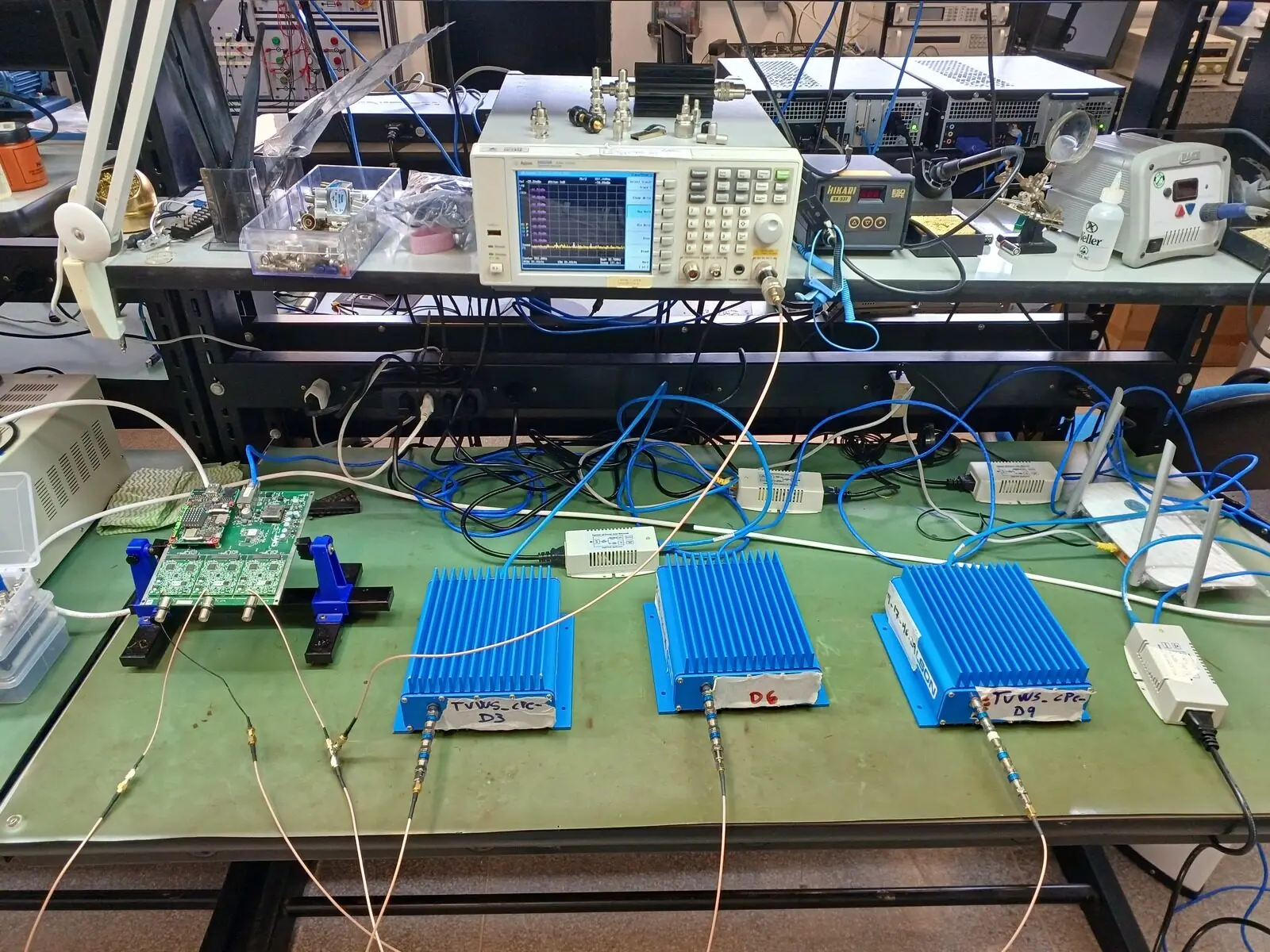
This was the goal of the second test of Phase 1, carried out in March and April 2024: to validate the operation of the TVWS equipment in a controlled environment and to test, one by one, the hypotheses raised in Mosqueiro.
How did the setup and construction go?
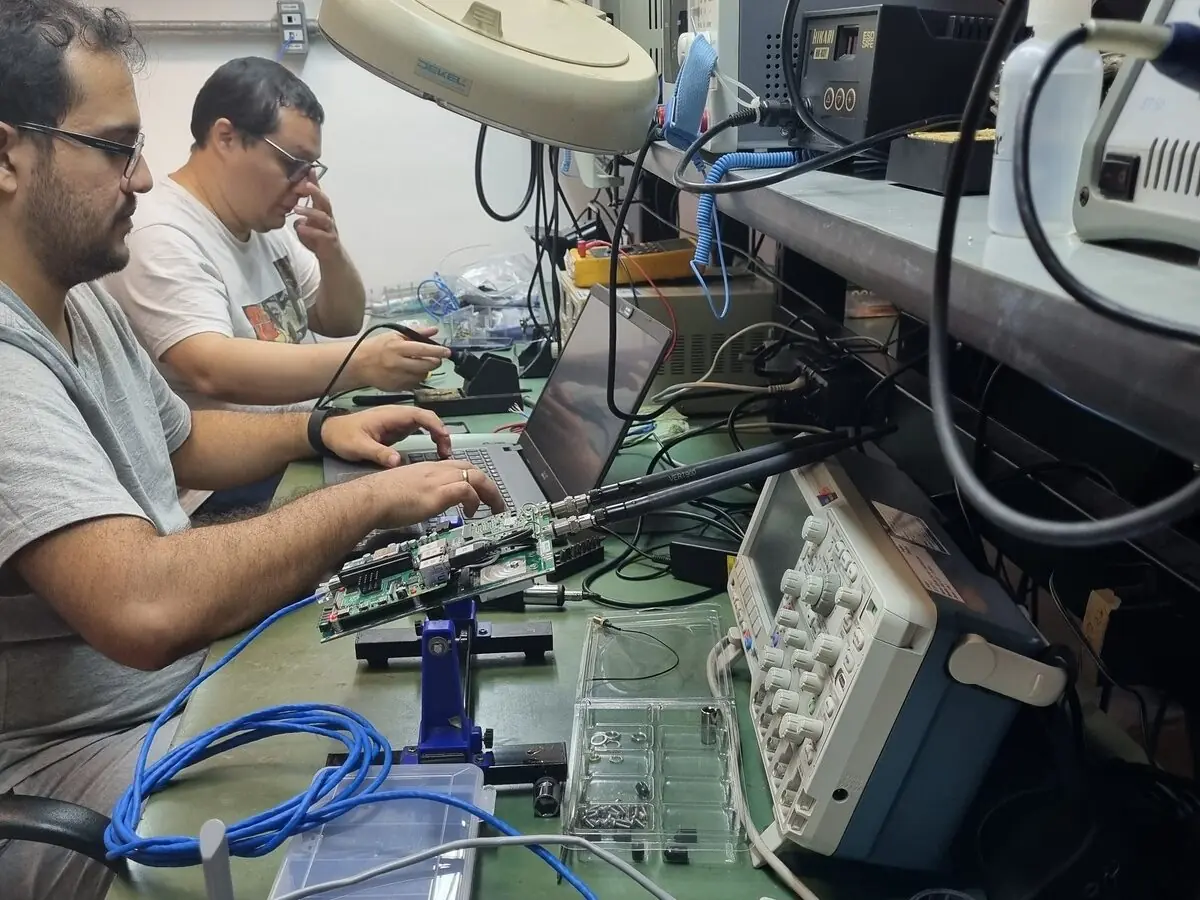
The space was provided by LASSE, the Research and Development Center for Telecommunications, Automation and Electronics of the Federal University of Pará (UFPA). The test bench was set up at the Guamá Science and Technology Park, in Belém. There the project had what was missing in the field: stable power, precision measuring instruments and time.
To examine the signal’s path, you need to know it. The signal is born in the radio of the base station and travels along a coaxial cable to the antenna. It then crosses the air to the antenna of the CPE and goes down another cable to the radio that will receive it. Between each of these parts there are connectors, the metal pieces that join them.
The image that accompanies this post is that of a garden hose. The longer and the poorer the quality of the hose, the less pressure reaches the end. A coaxial cable works in a similar way: part of the signal’s strength is lost along the cable. This loss, called attenuation, grows with the length and with the poorer quality of the material. Each joint is also a point where loss can occur.
How did the cable, antenna and spectrum analysis tests go?
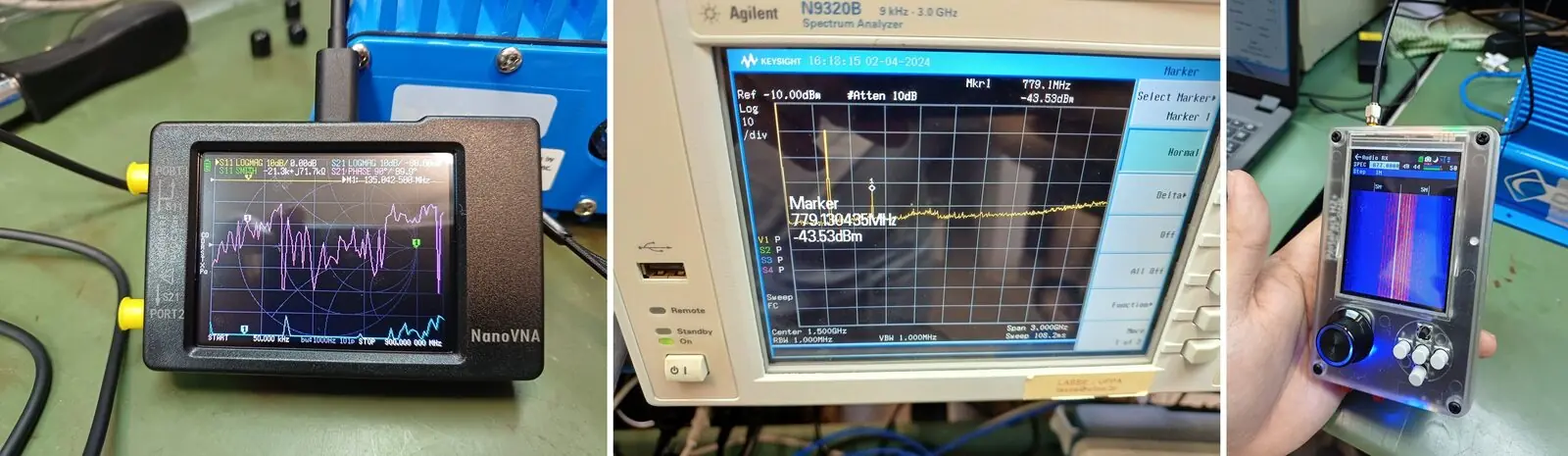
To measure the loss in the cables, the team used a NanoVNA, a portable vector network analyzer. It is a small instrument, the size of a cell phone, that sends a signal through a cable or antenna and measures how much of it reaches the other side and how much comes back reflected. The comparison was direct. The cables sent by Carlson Wireless, the kit’s manufacturer, were measured side by side with the cables made in Mosqueiro. The Mosqueiro cables lost much more signal.
This was the first confirmed hypothesis: the loss in the cables explained part of the short range measured in the field. In the hose image, a thinner, longer section was taking away pressure before the water reached the end.
Using the official antennas and the HackRF (a software defined radio), the team also mapped the TVWS channels and confirmed that some were already occupied in the region. This points to possible sources of interference, but does not prove that they affected the tests.
What did the oxidation in the radios reveal?
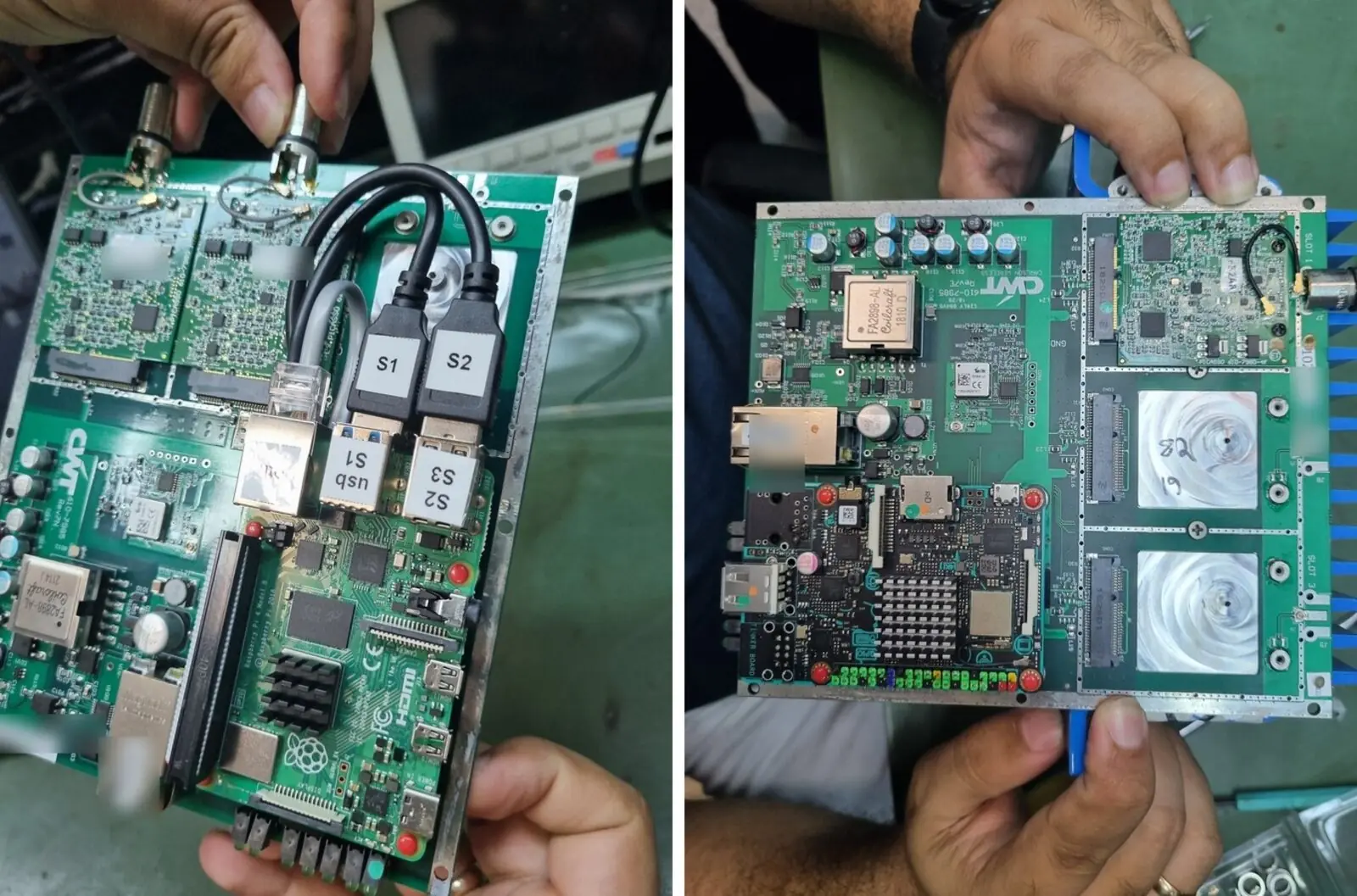
When they opened one of the base stations, the team found oxidation, the rust that forms on metal exposed to humidity, on the radio frequency connections, through which the radio signal passes. This problem was not on the Mosqueiro list. Even with good cables, oxidized connections reduce the strength of the signal, like a rusty joint in a hose.
Here the comparison has a limit. In a hose, the water that does not get through leaks out. In a cable, part of the signal that does not get through a bad connection goes back toward the radio, while another part turns into heat. The effect for whoever is at the end is the same: less signal.
First, the team measured the power to assess the impact. Then, they cleaned the connections and applied a chemical protection against new oxidation. The repair included:
- inspecting all connections and terminals;
- connecting the base station directly to three CPEs, to isolate this variable;
- replacing the original oxidized cables with new ones;
- adding measurement points to follow the signal with a spectrum analyzer.
How was the solar system improved?
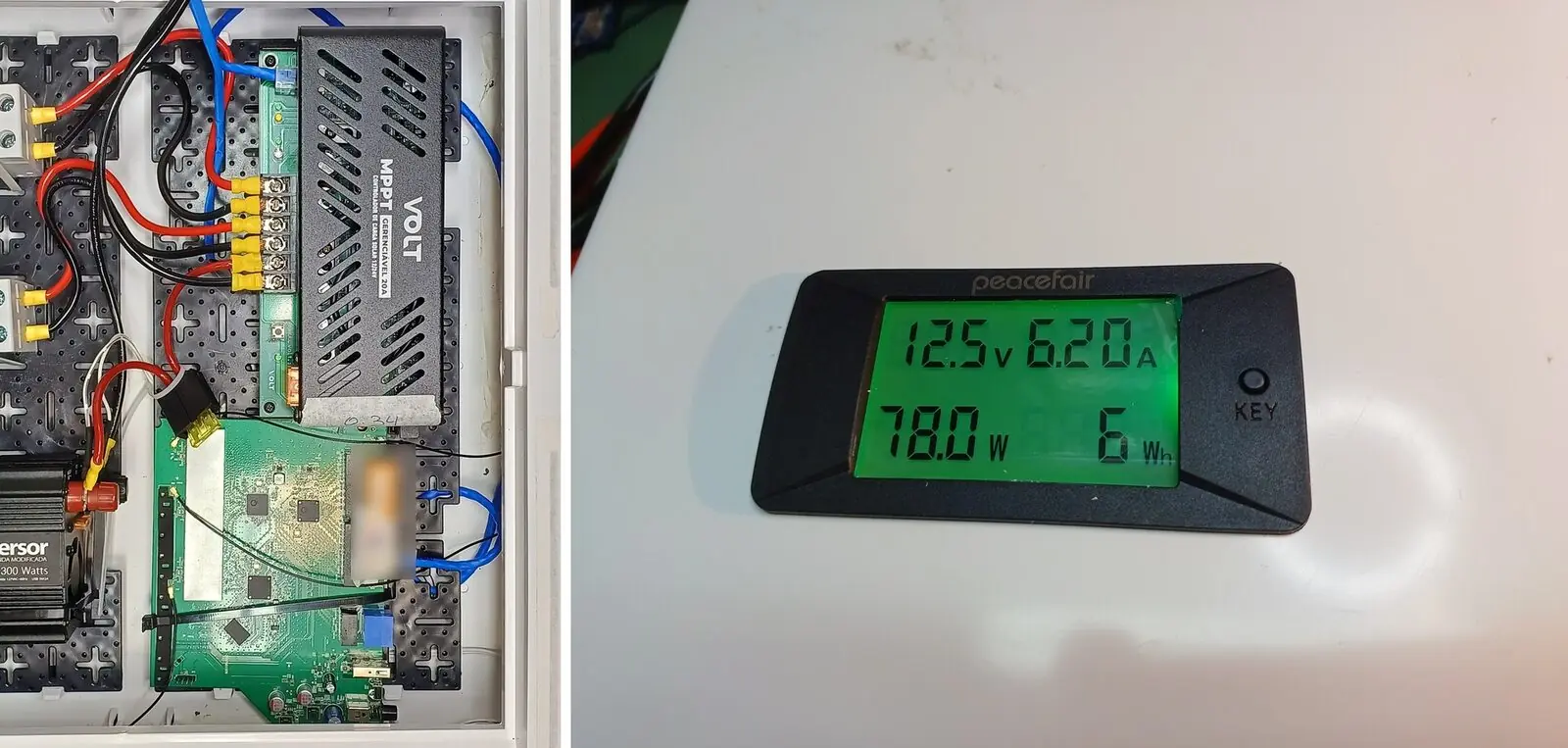
In parallel, the solar power system was also adjusted. The team installed a consumption analysis system that measures voltage, current and power. The cables were reorganized to ensure more stable operation in the field.
The box also received an Archer C7 router board, with two roles. The first is to act as a node of the mesh network, in which each device relays the signal to its neighbors. The second is to work as a monitoring bridge. Connected by a network cable (ethernet) to the MPPT charge controller, which regulates the energy going from the panels to the batteries, the router reads its data over SNMP, a protocol used to query network equipment remotely.
What were the measurements at PCT Guamá and UFPA?
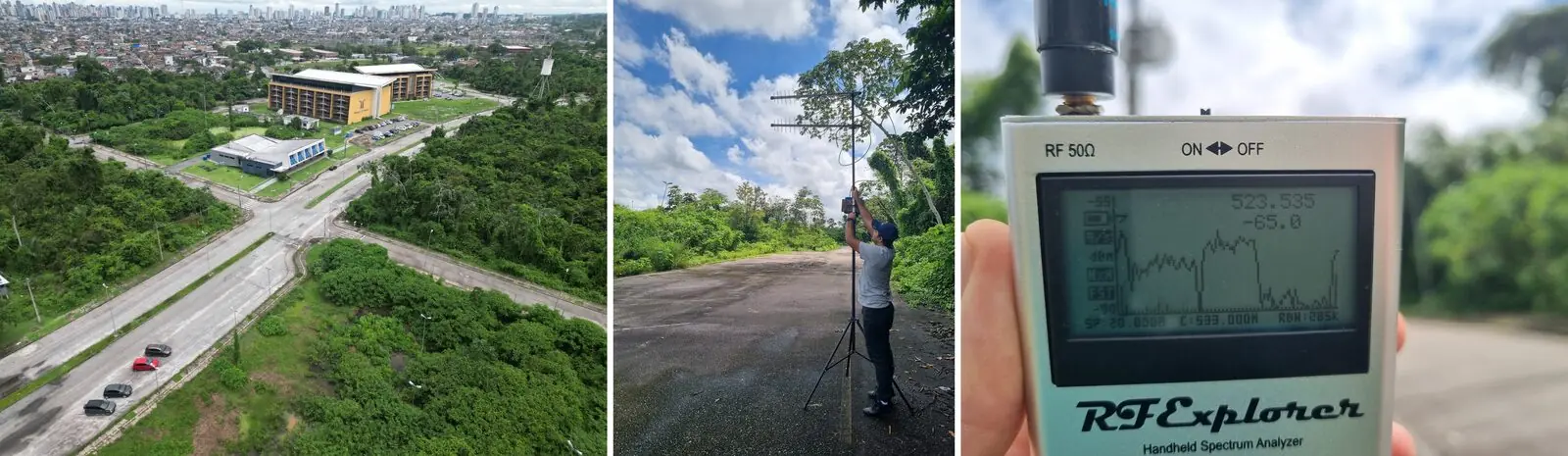
With the repairs done, the antennas were installed at six measurement points: four at the Guamá Science and Technology Park (PCT Guamá) and two on the UFPA campus. The result was a partial success. The first two points had good results. The third and fourth showed instability and signal failures. Adjustments to the position of the antennas improved the fourth point, but did not solve all the failures.
What are the final considerations?
By measuring one part of the path at a time, the team confirmed two real causes: the loss in the cables and the oxidation on the connections. The other hypotheses, such as an incompatibility between components, an error in the firmware or interference from other signals, still have no definitive answer. The laboratory did not have the instruments to test them separately.
What we learned in this stage:
- Poor cables and oxidized connections can, on their own, greatly reduce the range. Before suspecting the technology, it is worth examining the path.
- Fixing one problem does not guarantee fixing all of them. It is necessary to measure again, one part at a time.
- A laboratory can only confirm what it has the instruments to measure. The remaining hypotheses are left for another stage.
What now?
With the cables replaced and the connections restored, the kit was ready for the destination it was designed for: the Tururi village, in the Terra Indígena Caru, an Indigenous territory in the state of Maranhão. It remained to be seen whether these results would hold up in the territory.
Sources
- Project facts: Phase 1 logbook, Instituto Nupef, March and April 2024 (internal document).
Further reading
- Why a radio link has a shorter range than predicted (Explanation)
- Measure the loss of a coaxial cable with the NanoVNA (How-to guide)
- Inspect and restore oxidized RF connections (How-to guide)
Supported by: Internet Society Foundation (BOLT).