On a test bench, with the equipment a few meters apart, the signal arrived at 80% quality. Between January and February 2024, Nupef’s technical team took the same kit to Mosqueiro, a district of Belém, in the state of Pará. There the result was different: from 400 meters on, the equipment stopped communicating.
Mosqueiro is a river island near Belém, surrounded by water and with a lot of vegetation. It offered three conditions the project would need to deal with in the Terra Indígena Caru, an Indigenous territory in the state of Maranhão: water, forest and distance. It was the right place to test the whole kit working together before taking it to a territory where any mistake would cost another long trip.
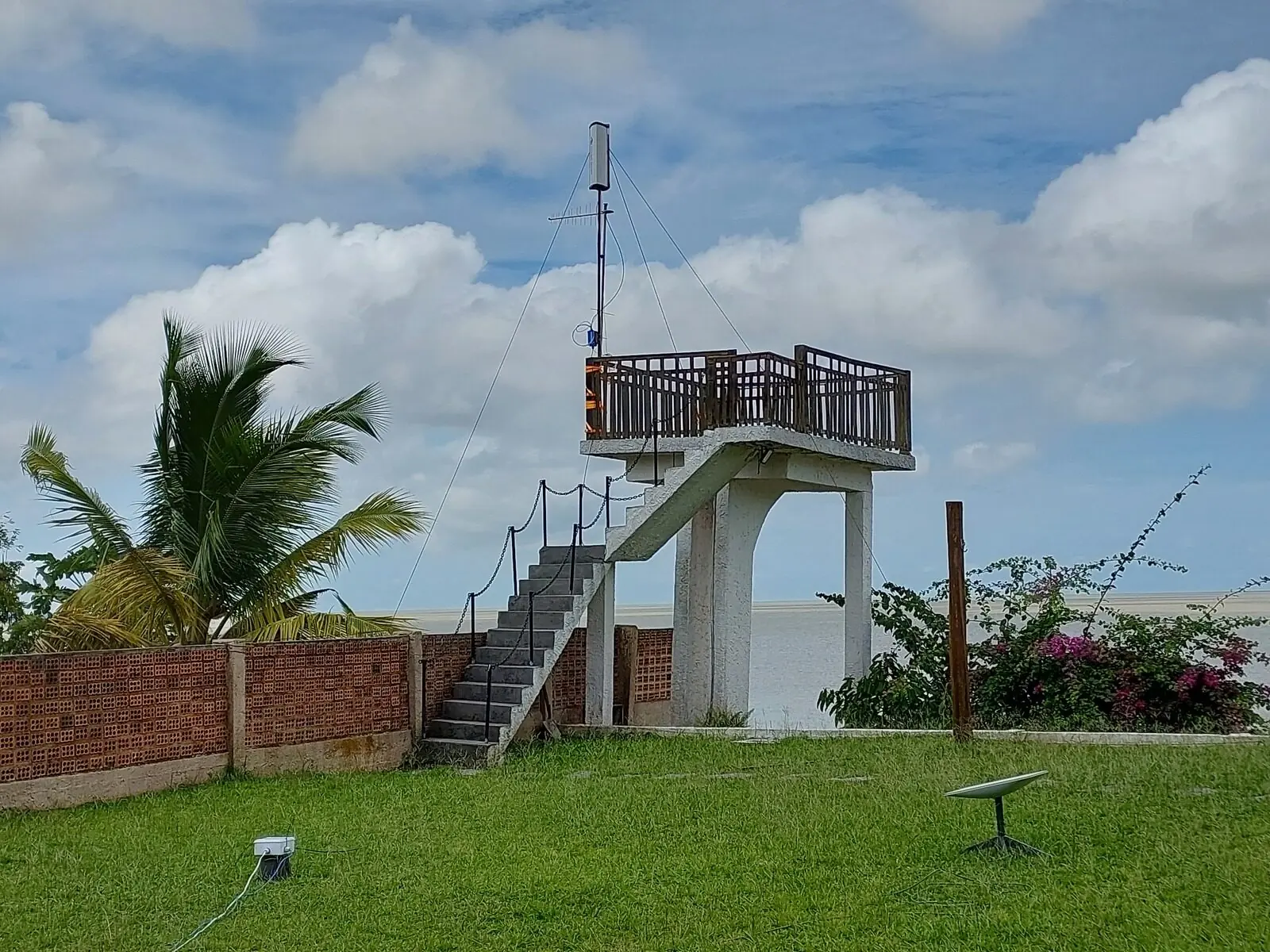
What equipment was in use?
At the center of the test was the TVWS kit, the technology that uses free bands of the television spectrum. It has two parts. The base station is the main radio, connected to antennas installed at a high point, where the signal starts out. The CPEs, short for customer premises equipment, are smaller radios with an antenna, installed where the connection will be used.
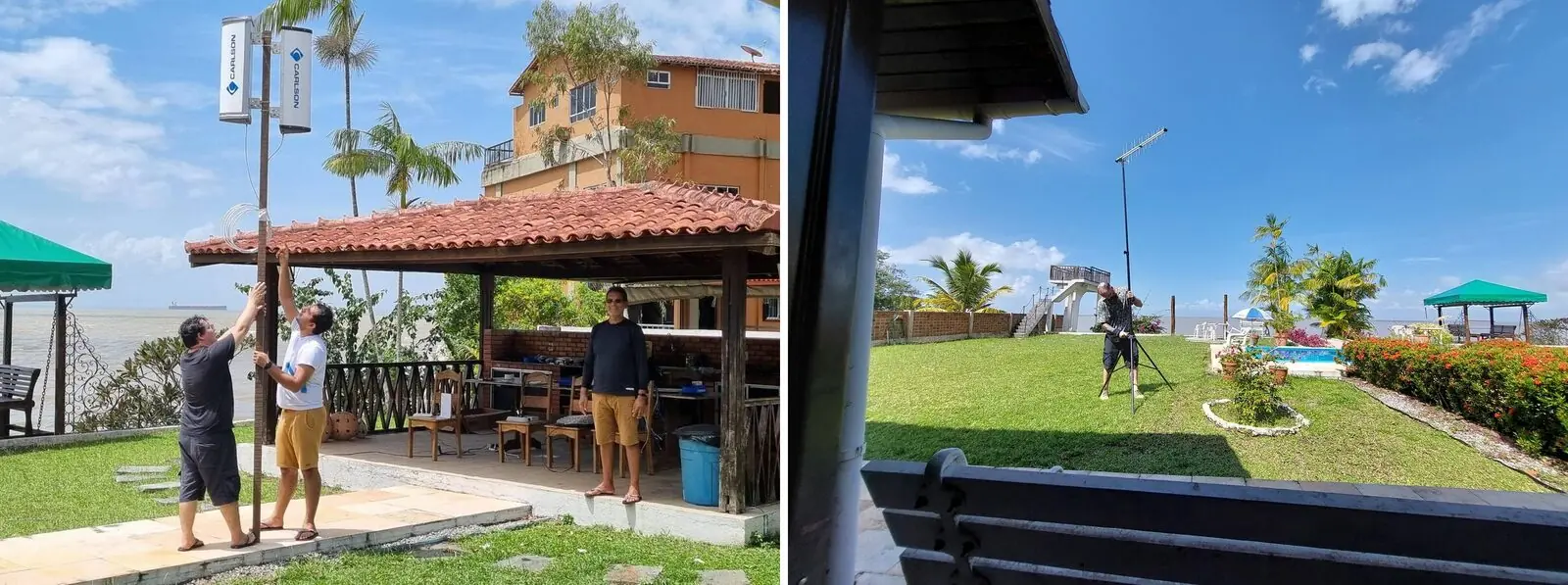
The antennas were sector antennas: they concentrate the signal in one direction, the way a flashlight concentrates light into a beam, instead of spreading it in all directions like a light bulb. This is the image that accompanies this post.
Along with the kit went instruments to observe the spectrum, such as a spectrum analyzer and software defined radios ( SDR). A solar power kit, communication radios for the team and a drone to observe the installation points from above also went along.
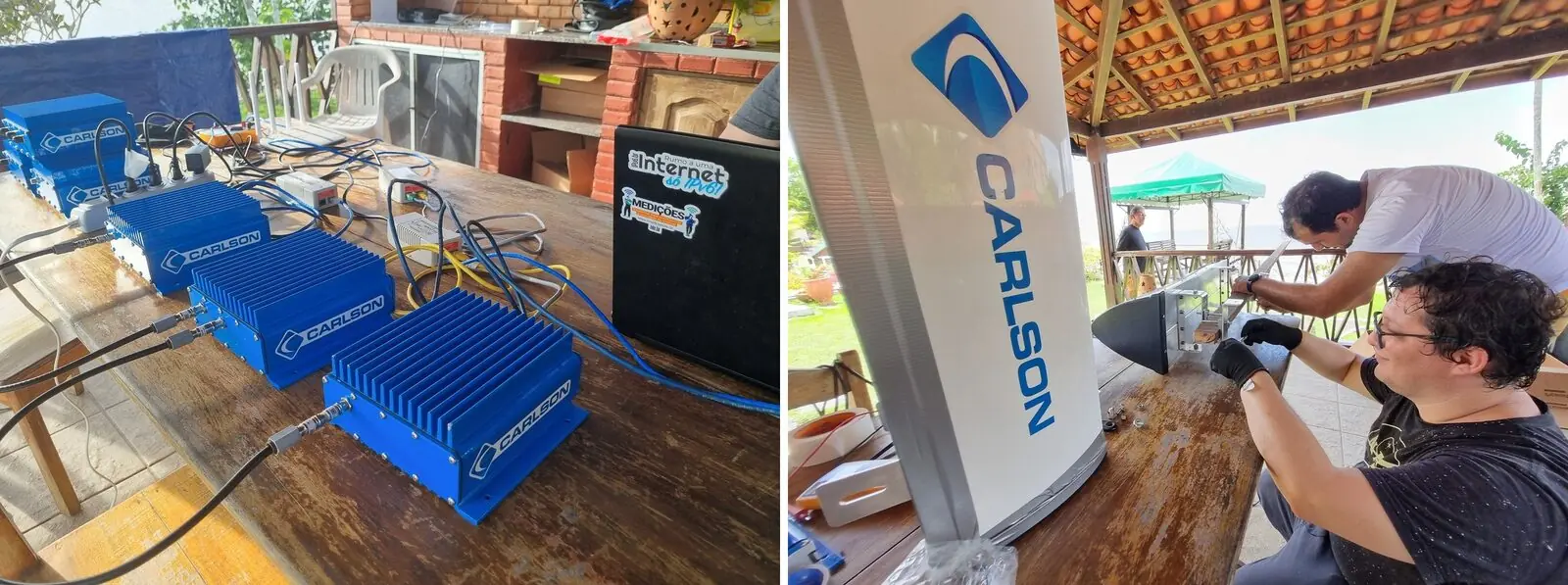
How did the bench test go?
Validation began before going into the field, on the test bench itself. The base station was connected directly to the CPEs by coaxial cable, with attenuators so that the strong signal would not damage the components.
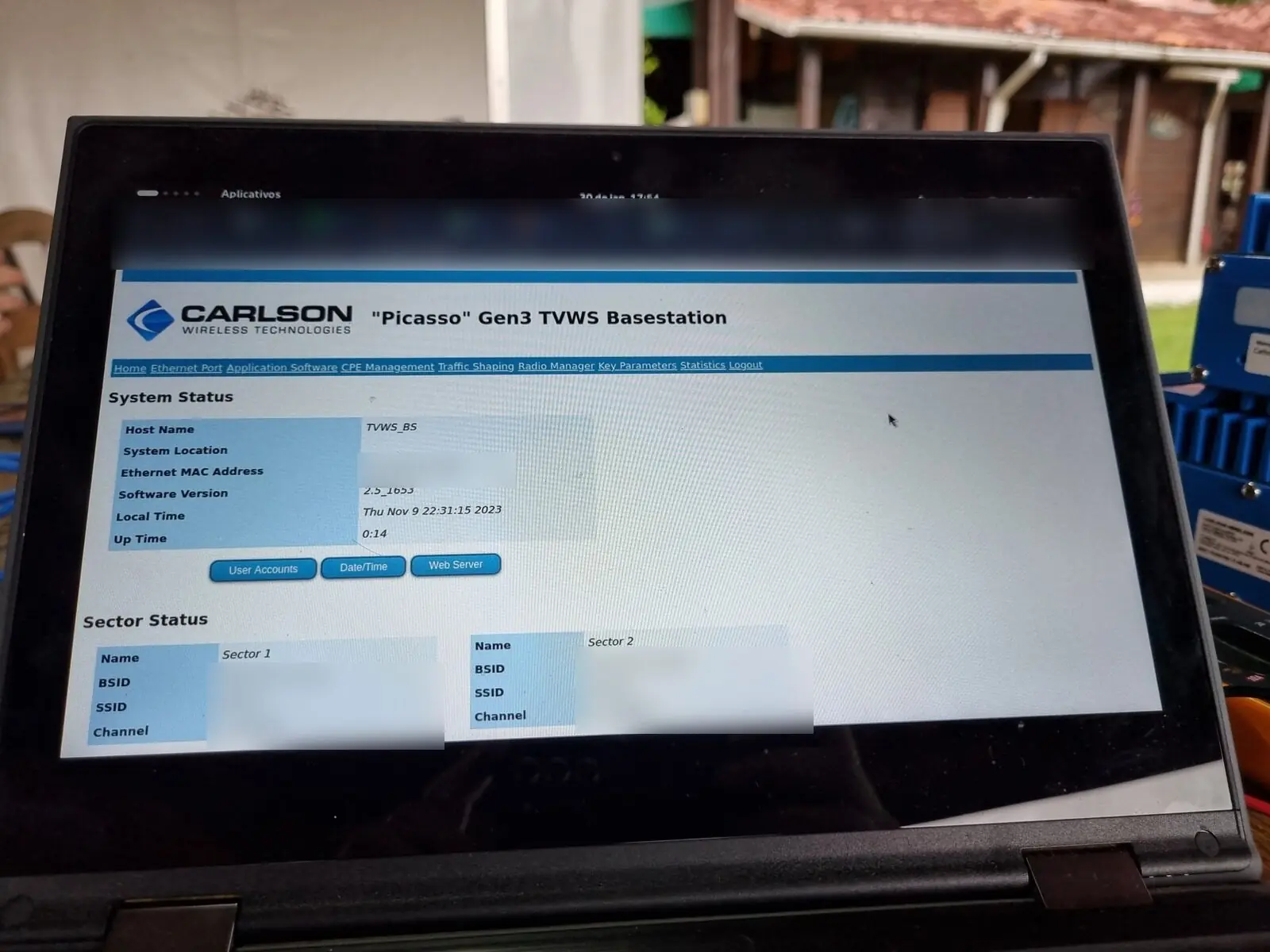
In the first test, all the equipment worked normally. In the second, with routers and computers already configured, the first surprises came: one of the devices received a network address different from the expected one and the indicator lights behaved inconsistently. The manufacturer’s material did not explain what each light pattern meant.
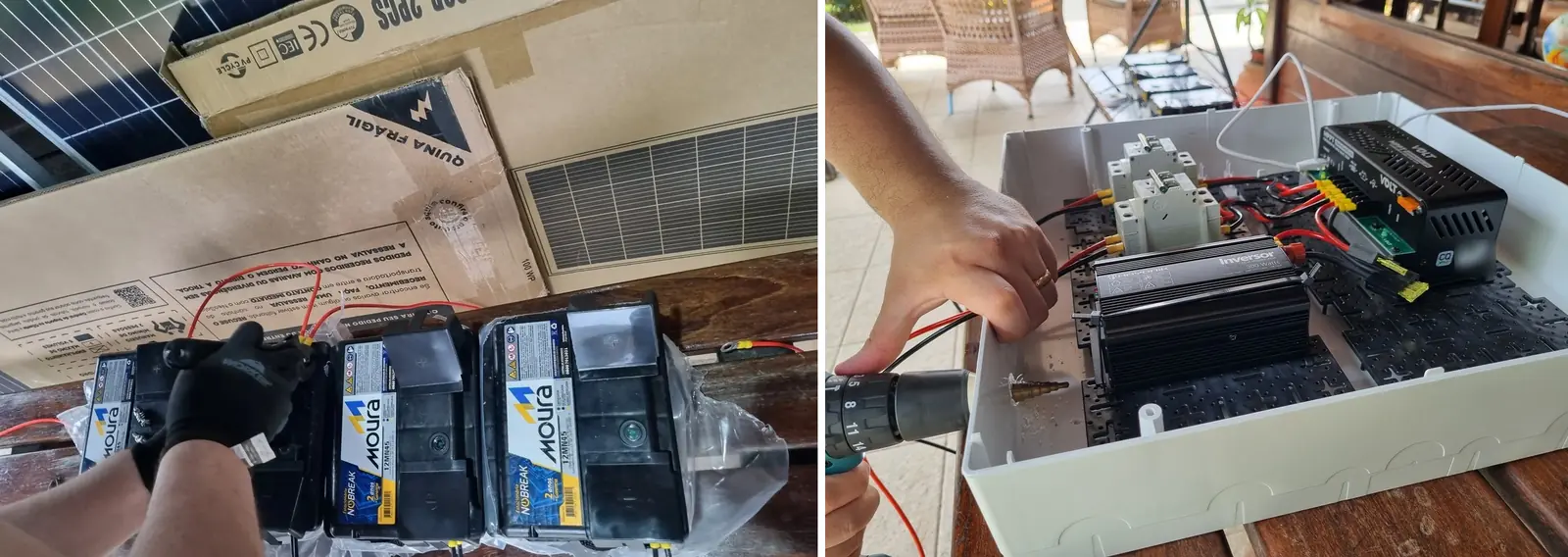
How did solar power for the CPE work?
The CPE was powered by an off-grid solar kit. The measurements showed that it draws about 10 W. An internet antenna via low Earth orbit satellite, like the one used as a backup in the project, draws 50 to 75 W. For anyone who depends on batteries charged by the sun, this difference decides how many hours the connection lasts after sunset.
How were the antennas mounted?
The base station was installed on a 4-meter pole on top of a lookout, about 9 meters above the ground. Two difficulties came up right away. There was no proper hardware to fix the equipment to the pole, which the team solved with local wooden boards. The cables that came with the kit were too short and were replaced with cables of about 3 meters made right there. This detail would matter again later.
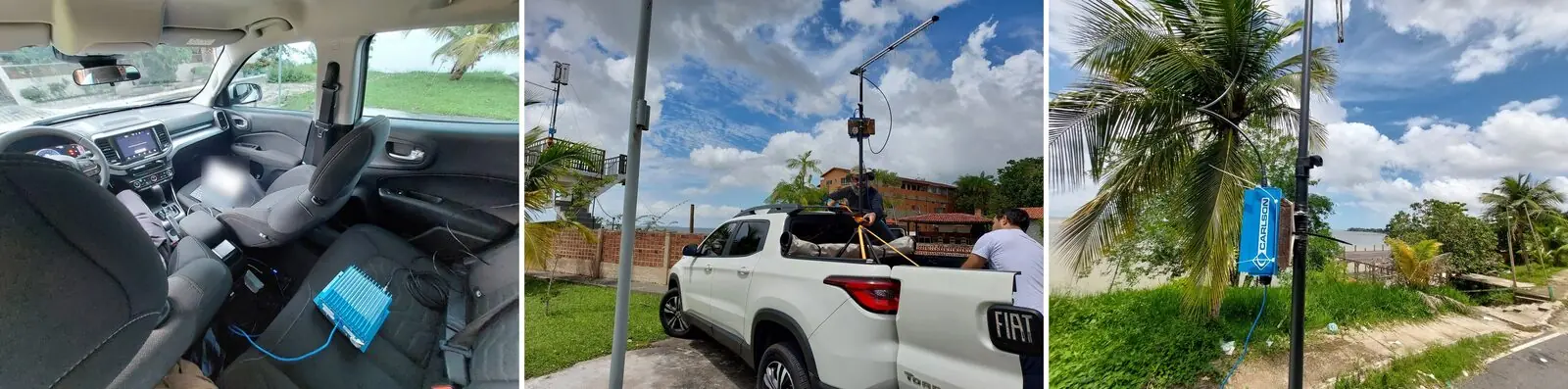
The fixed CPE stood 2.8 km from the base, about 6 meters high. A lighting tripod was adapted to serve as a mobile structure.
How did the first connectivity tests go?
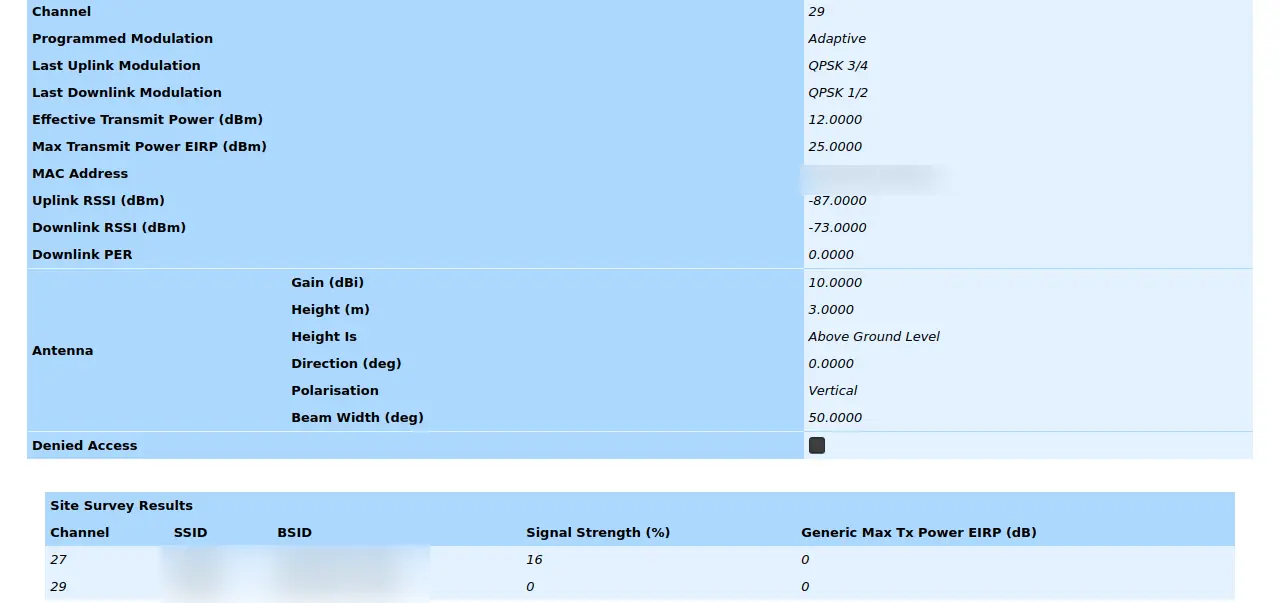
With the antennas 50 meters apart and pointed straight at each other, signal quality was 80%. When the CPE antenna was turned sideways, it dropped to 60%. Turned to face the opposite direction, it dropped to 35%. Like a flashlight pointed at the back wall, the antenna still received some signal, but only what arrived by reflection off other objects.
Then came the distance tests. The fixed point, on the balcony of a house 2.8 km from the base, could not connect even after several changes of position. Of the five mobile points tested along the river, only one received a signal, 200 meters from the base. Even so, it was a noisy signal, with a lot of packet loss. When the antennas were turned toward the interior of the island, the range reached 400 meters, but the losses remained high. Switching to another antenna model did not change the result.
Here the flashlight image reaches its limit. A flashlight does not shine through trees, while the TVWS signal does get through them, at least in part. The comparison helps to understand the direction of the signal, but it does not explain why the signal lost so much strength with distance.
What hypotheses were raised?
When the result falls so far below expectations, the first task is to list everything that could explain it, without choosing a cause too early. The team arrived at six hypotheses:
- Cables: longer or lower-quality coaxial cables could limit the range to less than 1 km.
- Chips: an incompatibility between internal components could prevent proper control of the radio part of the equipment.
- Firmware: the firmware might not be correctly configured for the manufacturer’s new chip.
- Interference: other signals in the region could be causing interference.
- Spectrum saturation: there could be spectrum saturation, but the instruments used in the field did not confirm it.
- Antenna height: especially that of the base station.
To have a reference, the team used the program Radio Mobile, which simulates, based on terrain, the expected signal on each link. The simulation predicted much better results than those measured. It does not say what went wrong, but it shows that something along the way was taking strength from the signal.
What did this field test leave us?
The range dropped from kilometers, as expected, to a few hundred meters. At the end of Mosqueiro, we still did not know why: the six hypotheses remained open. The rest of the kit, however, worked. Solar power, team communication and drone recording needed only adjustments.
What we learned in this stage:
- “We do not know yet” is a legitimate answer when several possible causes remain open at the same time.
- A field test shows that a problem exists, but rarely reveals its cause. For that, it is necessary to go back to a controlled environment.
- What the simulation predicts can be very different from what is measured in the field, even with the same input data.
What now?
With six hypotheses on the table and no way to test them one by one in Mosqueiro, the next step was to go back to a laboratory equipped to measure each part of the system separately. Was the problem in the cables, in the equipment or in a combination of the two?
Sources
- Project facts: Phase 1 logbook, Instituto Nupef, January and February 2024 (internal document).
Further reading
- Why a radio link has a shorter range than predicted (Explanation)
- Set up a TVWS test bench with attenuators (How-to guide)
Supported by: Internet Society Foundation (BOLT).